 Casa Grande Stucco Repair
 Stucco Patching in Casa Grande
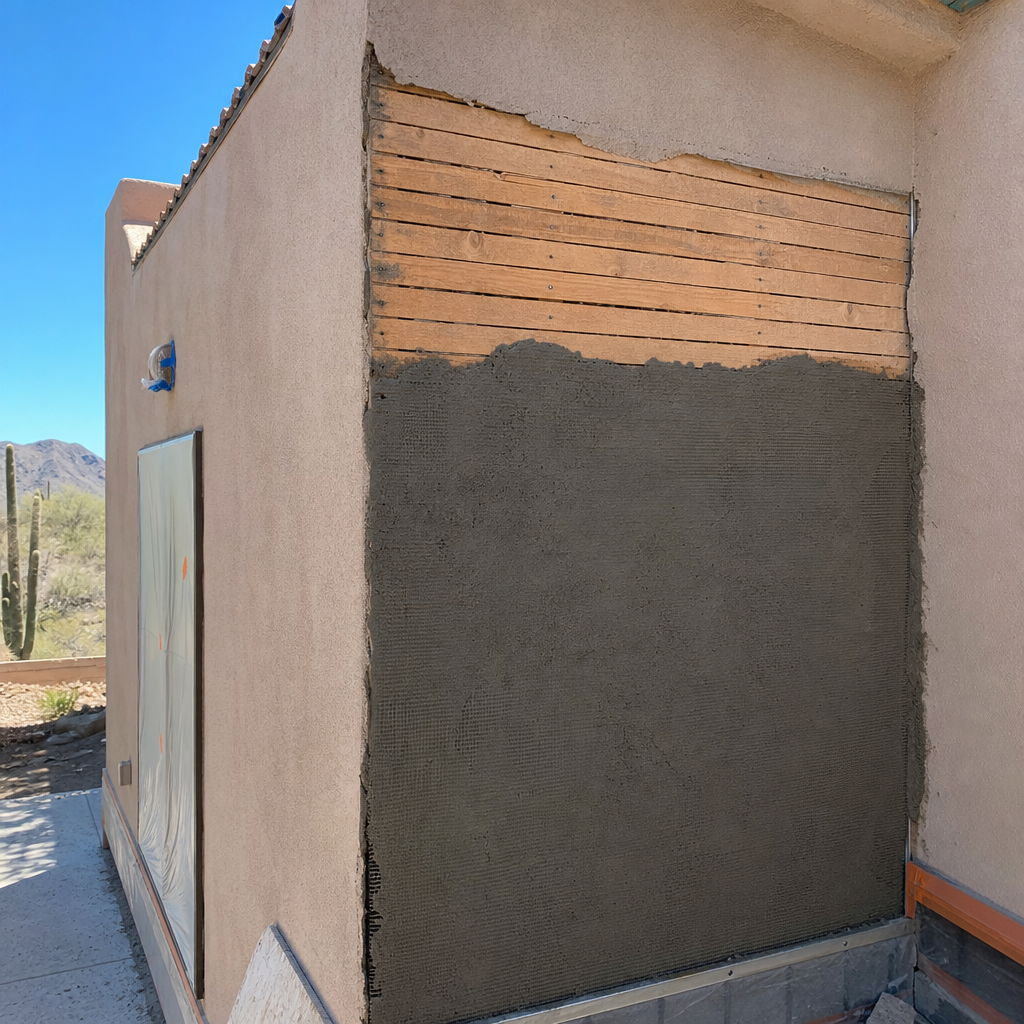
Stucco patching in Casa Grande runs $500 to $2,000 for the typical repair where the stucco has gone hollow, blown out, or crumbled to bare lath, and $8 to $15 per square foot for larger areas. A real patch does not skim over the soft spot. It cuts back to sound material, rebuilds the weather barrier, lath, and cement coats, and feathers a matched finish into the wall. Send photos and you will know within a day whether you are at the $600 stage or the $1,800 stage.
What a hollow wall is telling you
Stucco bonds to the wall as a system: weather-resistive paper, lath, and cement coats locked together. When water gets behind it, the paper rots, the lath rusts and expands, and the cement lets go of what is behind it. From outside the wall looks fine for a while. Then it sounds hollow when tapped, then it bulges, then a chunk comes off in a monsoon storm and you are looking at rusty wire.
The tap test is the whole diagnosis. Rap the wall with a knuckle or a screwdriver handle across the suspect area and a foot or two beyond it. Solid stucco sounds solid. Delaminated stucco sounds like a drum, and the hollow area is almost always larger than the visible damage. That is why a proper patch is cut back past what you can see, and why the quote is made from sounding the wall, not from the size of the hole.
Other tells: rust bleeding through the finish (the lath is corroding), white efflorescence at the base (salts carried by water wicking through), finish coat flaking off in sheets (a failed bond between finish and basecoat), and a crack you can push on and feel move.
Where Casa Grande walls fail
Wall bases, first and worst. The most common patch in the newer subdivisions is the bottom foot of a wall. Three things cause it. Sprinkler heads aimed at the house wet the same strip of stucco every night. Landscape rock or soil piled against the wall buries the weep screed, the metal flashing at the bottom of a stucco wall that lets water drain out, so instead of draining the wall drinks from the ground. And grade sloped toward the house keeps the base wet after every storm. On one-coat stucco with foam sheathing behind it, that moisture has nowhere to go. The sequence is efflorescence, staining, soft stucco. The repair is a base patch plus the unglamorous half: adjusting the sprinkler, pulling the rock back below the screed, correcting the grade. Skip that half and the patch fails on schedule.
Under failed scuppers and roof edges. On flat-roof and parapet homes, and at any spot where a roof drains onto a wall, a vertical stain fanning out below the outlet marks where roof water has been running down the stucco every storm. The stucco behind that stain is usually hollow deep and narrow. The fix pairs a patch with re-flashing the scupper; see foam trim and parapet repair.
Impact damage. One-coat stucco is about 1/2 inch of cement over foam. A ladder, a trailer hitch, a mower, or a haboob-thrown patio chair punches through it. Small holes are cheap to patch early; left open through a monsoon, water gets behind the whole area.
Around windows and penetrations. Failed sealant at window flanges, hose bibs, light fixtures, and AC line sets lets water behind the stucco. The patch is often small; the flashing correction is the point.
Old repairs. Builder punch-list patches from the 2003 to 2009 boom in Mission Royale, Ironwood Commons, and Villago were often skim-coated over a rushed basecoat. Fifteen to twenty years later they are letting go in the same spot. The right fix cuts those out entirely rather than patching the patch.
How a proper patch is built
- Sound the wall and identify the system. One-coat, three-coat, or synthetic. The system determines the materials; EIFS gets EIFS components, never cement.
- Cut back to sound material. Saw-cut a clean edge past the hollow area, chip out the failed stucco, and remove rusted lath and rotten paper. On one-coat walls, the foam sheathing behind it gets checked and anything water-damaged replaced.
- Rebuild the weather barrier. New water-resistive paper lapped shingle-style into the existing paper so water runs out, never in. This lap is where cheap patches fail: paper tucked behind the old paper at the top and over it at the bottom, or the water goes straight into the wall.
- New lath, tied in. Galvanized lath fastened and tied into the existing lath so the patch and the wall move together instead of cracking at the seam.
- Basecoats, moist-cured. Scratch coat, then brown coat floated flush with the surrounding wall. In a Casa Grande summer, with 116.8 days a year at 100 or hotter per the NOAA normals, that means shade, early starts, and misting so the cement does not flash-dry and shrink-crack. The brown coat sits before the finish goes on. Rushing this step is how patches crack within a season.
- Finish and blend. The finish coat matches your texture and is feathered out past the patch edge. We blend the color to the faded wall and only judge it once it is dry and in daylight. On a faded elevation the honest choices are a blended patch, a fog coat of that wall, or a recoat; details on color and texture matching.
- Fix the cause. Sprinkler, grade, weep screed, scupper, sealant. It goes on the quote because leaving it off is how you pay twice.
When a patch is the wrong tool
If the tap test finds hollow stucco across a large share of an elevation, or on several walls, patching is chasing the problem one hole at a time. The weather barrier has failed broadly and the honest answer is a partial or full restucco, priced by area. Conversely, if the wall is solid and just faded and map-cracked, you do not need a patch at all; a fog coat or elastomeric coating resets it. And a single moving crack in sound wall is crack repair, not a patch. Sounding the wall tells you which of those you own, and the quote should say so.
Timing, permits, and price
Like-for-like patching is finish and maintenance work under the City of Casa Grande’s building code; no permit is normally involved. Anything structural needs a building permit; check with the City of Casa Grande building office, or Pinal County building for addresses outside city limits, before work starts. The best months are October through May. The deadline that matters is June 15, the start of the National Weather Service monsoon season, because a hollow wall base that is dry in May is a saturated one after the July and August storms that deliver most of Casa Grande’s 3.15 inches of summer rain.
Patch pricing sits on the pricing page with everything else. Patching is covered across Casa Grande and out to Maricopa, Coolidge, Eloy, Florence, and Arizona City. Photos to send: the damaged area, a wide shot of the wall, and the sprinkler, rock, scupper, or grade next to it. Ask for the quote with the diagnosis attached.
Frequently Asked Questions
How much does stucco patching cost in Casa Grande?
Typical patches over exposed lath or hollow areas run $500 to $2,000, and larger areas $8 to $15 per square foot depending on system and access. A wall-base patch from sprinkler damage is usually at the low end; a two-story patch under a failed scupper is at the high end.
How do I know if my stucco is hollow?
Tap it with your knuckle or a screwdriver handle. Sound stucco raps solid; delaminated stucco sounds like a drum. Also look for bulging, rust bleeding through the surface, white efflorescence at the base, and finish flaking off in sheets. Any of those means the bond behind the surface has failed.
Can you just skim over the soft spot?
No, and neither should anyone else. Skimming over delaminated stucco hides the problem while the rusted lath and rotten paper keep failing behind it. A proper patch cuts back to sound material and rebuilds the paper, lath, and coats. That is the difference between a repair and a listing photo.
Why is my stucco failing near the ground?
Water wicking up from the base: sprinklers hitting the wall, grade sloped toward the house, or landscape rock piled over the weep screed so the wall never drains. It shows as efflorescence, staining, then soft crumbling stucco. The patch has to include fixing the water source or it comes back.